
What are integrated shading solutions? A 2026 guide


TL;DR:
Integrated shading solutions are built directly into building facades, windows, or outdoor frameworks to improve comfort, reduce heat gain, and enhance architecture. They include both flexible, operable systems like motorised awnings and fixed structures such as brise soleil and solar control glass, offering varied performance benefits and design options. Early planning and smart automation are essential to maximize energy savings, occupant comfort, and architectural value.
Integrated shading solutions are systems built directly into a building’s façade, window structure, or outdoor framework to regulate sunlight, reduce heat gain, and improve occupant comfort without compromising aesthetics. Unlike standalone blinds or portable parasols, these systems form part of the architecture itself, whether as motorised external awnings, brise soleil, solar control glazing, or pergola structures with automated canopies. The industry term you will encounter across architectural specifications is solar shading, and it covers both flexible operable systems and fixed structural solutions. Brands such as Weinor, Seele, and platforms like Control4 now sit at the centre of this market, combining precision engineering with smart automation to deliver results that standalone products simply cannot match.
What types of integrated shading solutions are available?
Integrated shading systems divide into two broad categories: flexible systems and fixed systems. Understanding the difference is the first step to specifying the right solution for any project.
Flexible systems are operable. They move, retract, or adjust in response to conditions or user commands. This category includes:
Motorised external awnings and retractable canopies
Integrated roller blinds or venetian blinds within double-glazed units
Operable louvres and shutters fixed to window frames or façades
Pergola canopies with automated fabric or polycarbonate panels
Fixed systems are structural or glazing-based. They do not move but are engineered to intercept solar radiation by design. Examples include:
Brise soleil (horizontal or vertical fins mounted to the façade)
Solar control glass with low-emissivity coatings
Building-integrated photovoltaics (BIPV), where the shading element also generates electricity
Specialised double-skin façades with shading slats sealed inside the cavity
The table below summarises the key differences across system types:
System type | Typical materials | Primary function |
Motorised awning or canopy | Acrylic or polyester fabric, aluminium frame | Solar and rain protection, outdoor comfort |
Integrated blind in glazing | Aluminium slats, sealed glass cavity | Glare control, privacy, thermal regulation |
Brise soleil | Aluminium, timber, stainless steel | Fixed solar interception, architectural expression |
Solar control glass | Low-E coated glass (U-values 0.8–1.2 W/m²K) | Passive heat reduction, green building credits |
BIPV shading panel | Photovoltaic cells in framed modules | Energy generation combined with shading |
Material selection matters beyond aesthetics. For systems where slats are sealed inside glass cavities, residue-free slat materials are non-negotiable. Any off-gassing or particulate residue inside a sealed unit causes permanent fogging, which destroys both performance and appearance over time. Seele’s ISOshade® curved system addresses this with precision-engineered, enclosed operable slats that remain maintenance-free within the sealed cavity, making it a strong reference point for architects working on curved or complex façade geometries.
Pro Tip: When comparing internal versus external placement, external shading almost always outperforms internal. External systems intercept heat before it contacts the glass, whereas internal blinds trap solar energy against the pane and act like a radiator inside the room.
How do integrated shading solutions work?
The basic operating principle is straightforward: shading elements intercept solar radiation before it enters a space, reducing heat gain and glare. The sophistication lies in how modern systems decide when and how much to shade.
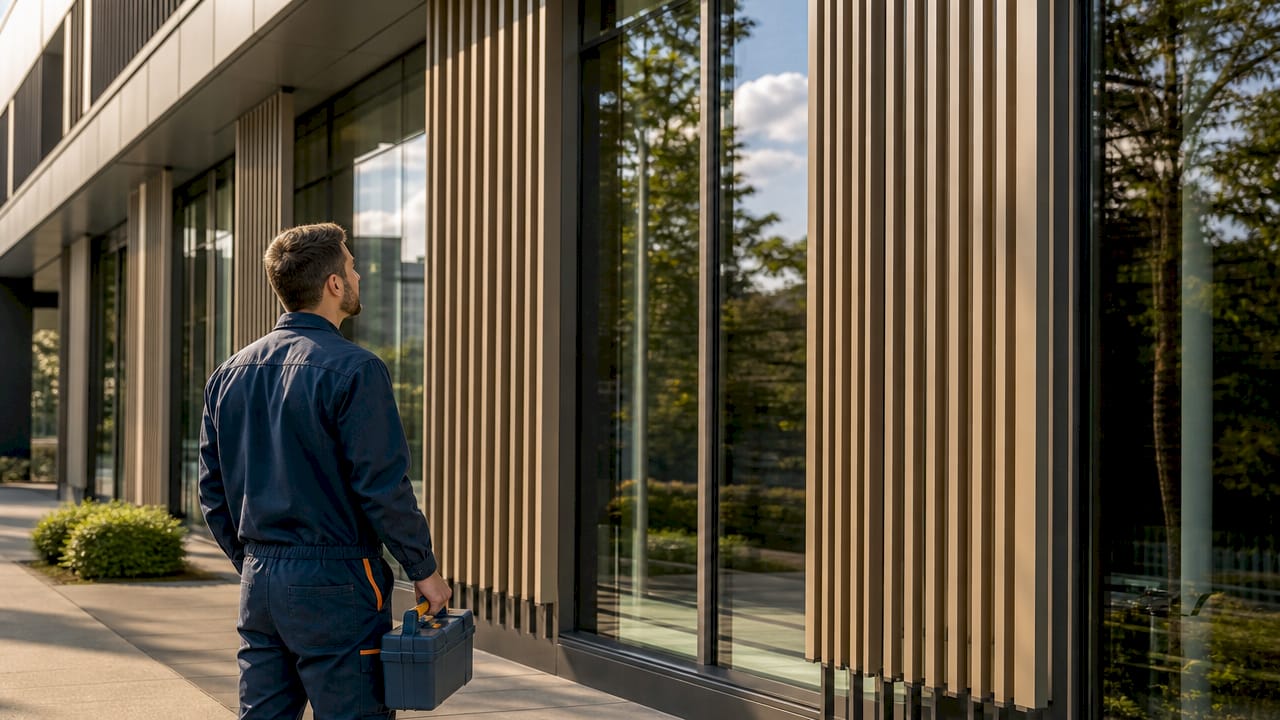
Manual systems rely on occupant judgement. Motorised systems add convenience. But fully integrated smart shading goes further by connecting to environmental sensors that monitor sun position, ambient temperature, and occupancy levels in real time. Automated shading linked to IoT platforms such as Control4 or Savant adjusts positions continuously without any human input, optimising comfort and energy use simultaneously. This matters because occupants rarely adjust shading at the precise moment it would be most effective.
The control logic in advanced systems balances several competing priorities at once:
Daylight quality: maintaining adequate natural light without glare
Thermal comfort: limiting solar heat gain during peak sun hours
Energy performance: reducing cooling loads and, where BIPV is involved, maximising electricity generation
Occupant preference: overriding automated positions when users need a specific view or light level
The most technically demanding scenario involves photovoltaic shading devices (PVSD). Multi-criteria control strategies are critical here because optimising for maximum solar yield can conflict directly with daylight quality or glare control. A PVSD tilted for peak energy generation may simultaneously flood a workspace with glare, reducing productivity. Resolving this conflict requires algorithms that weight each criterion according to the building’s priorities at any given time of day.
Kinetic façades represent the frontier of this technology. These are building skins where individual shading panels move independently, creating a dynamic, responsive exterior that adapts to solar angles in real time. While currently more common in commercial architecture, the underlying sensor and actuator technology is filtering into residential pergola and awning systems.
Pro Tip: Do not conflate energy performance optimisation with occupant comfort optimisation. A system tuned purely for energy savings may leave occupants in dimly lit or overheated spaces. The best specifications set comfort as the primary goal and treat energy savings as the outcome.
What are the main benefits of integrated shading solutions?
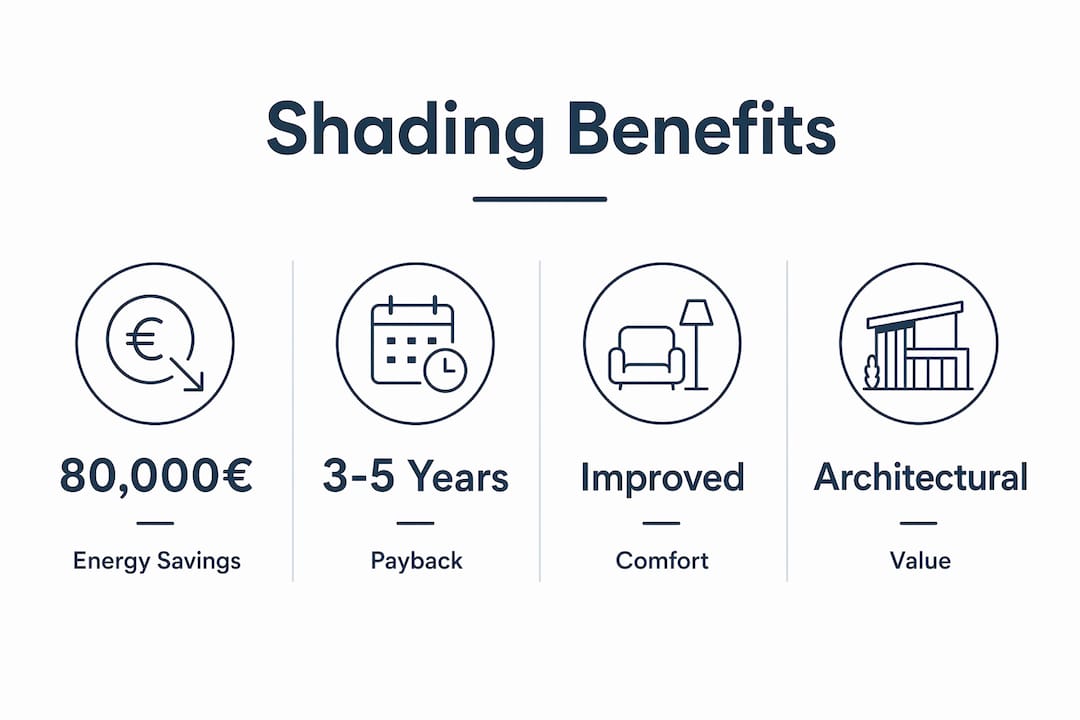
The commercial case for integrated shading is well established. Payback within 3 to 5 years is typical for commercial buildings, with energy savings of €80,000 to €100,000 over a 20-year lifecycle for every 100 m² of treated façade. That figure represents a compelling return on investment for any building owner or facilities manager evaluating capital expenditure.
For residential properties, the numbers are equally persuasive. Automated awnings reduce UK home heat gain by up to 77%, which translates directly into lower air conditioning costs and a more comfortable living environment during summer months. This single statistic explains why motorised awnings and pergola canopies have moved from luxury additions to practical investments for homeowners across Yorkshire, Derbyshire, and beyond.
The full range of benefits extends well beyond energy bills:
Thermal regulation: external shading cuts cooling loads by up to 40%, reducing strain on HVAC systems and extending their operational life
Glare control: diffused natural light improves visual comfort in offices and living spaces, reducing eye strain and increasing productivity
Green building credentials: integrating shading with low-E glazing earns credits under BREEAM and LEED certification frameworks, supporting sustainability targets
Architectural coherence: well-designed shading becomes part of the building’s visual identity rather than an afterthought bolted on after completion
Carbon footprint reduction: lower energy demand directly reduces a building’s operational carbon, which is increasingly relevant under UK net-zero commitments
The aesthetic dimension deserves particular attention. Well-designed integrated shading can serve as an architectural expression, supporting visual and functional goals simultaneously. A brise soleil that creates rhythm across a façade, or a pergola with clean aluminium lines, adds genuine design value that a freestanding parasol never could.
Design and installation: what you need to know
The single most important principle in integrated shading design is timing. Interdisciplinary coordination from the early design phase is what separates high-performing shading from expensive retrofits that never quite work. When shading is considered after glazing specifications are fixed and structural elements are in place, the options narrow considerably and costs rise.
For new builds and major refurbishments, the design process should address three questions simultaneously: how much daylight does the space need, what thermal performance is required, and what is the glare risk at different times of year? These three factors often pull in different directions, and resolving them requires input from architects, façade engineers, and shading suppliers working together from the outset.
The table below outlines the key design considerations at each project stage:
Project stage | Key shading consideration | Common mistake to avoid |
Concept design | Orientation and solar exposure analysis | Ignoring shading until glazing is specified |
Technical design | System type selection and material specification | Choosing internal over external for thermal performance |
Procurement | Supplier coordination with glazing contractor | Treating shading as a separate package |
Installation | Sensor positioning and automation commissioning | Installing sensors in shaded or unrepresentative locations |
Post-occupancy | Comfort monitoring and control logic refinement | Setting and forgetting automation parameters |
For projects with curved or non-standard façades, systems like ISOshade® curved demonstrate that high design flexibility and performance are achievable even in complex geometries. The sealed cavity design eliminates ongoing maintenance while the operable slats provide full solar control. This kind of solution is relevant not just for commercial towers but for bespoke residential extensions and garden rooms where architectural ambition meets practical performance requirements.
Retrofitting smart shading to existing properties is increasingly viable. Sensor-enabled awnings from manufacturers like Weinor can connect to home automation systems, bringing a meaningful level of integration to properties where structural shading was never part of the original design. You can explore outdoor shading for UK homes to understand which system types suit different property configurations.
Pro Tip: Always specify external shading in preference to internal where thermal performance is a priority. If internal shading is the only option due to planning constraints or building type, combine it with high-performance solar control glass to partially compensate for the reduced thermal effectiveness.
Key takeaways
Integrated shading solutions deliver measurable energy savings, improved comfort, and architectural value when specified early, positioned externally, and connected to smart automation systems.
Point | Details |
External placement outperforms internal | External shading intercepts heat before it reaches the glass, cutting cooling loads by up to 40%. |
Early design integration is critical | Specifying shading at concept stage avoids costly retrofits and achieves the best thermal and daylight balance. |
Automation multiplies performance | IoT-connected systems using platforms like Control4 adjust shading continuously, removing reliance on occupant behaviour. |
Commercial ROI is proven | Energy savings of €80,000 to €100,000 over 20 years per 100 m² façade make the business case straightforward. |
Material selection affects longevity | Sealed cavity systems require residue-free slat materials to prevent fogging and maintain long-term performance. |
Why I think most people specify shading too late
After working in the outdoor structures sector for over 15 years, the pattern I see most often is this: shading is treated as a finishing touch rather than a structural decision. A homeowner or developer gets to the end of a project, realises the south-facing glazing turns the room into a greenhouse every summer, and then looks for a solution. At that point, the best options are already off the table.
The buildings and outdoor spaces that perform best are the ones where shading was part of the brief from day one. That does not mean specifying every detail upfront. It means asking the right questions early: which elevations face south or west, what is the glare risk in summer, and does the client want manual control or full automation? Those three questions, asked at the right time, open up the full range of energy-efficient shading options rather than the limited set available as an afterthought.
The technology has genuinely moved on. Kinetic photovoltaic shading, multi-criteria automation, and sensor-enabled pergola canopies are no longer niche products for commercial skyscrapers. They are available for residential gardens and commercial terraces at accessible price points. The barrier is not technology or cost. It is the habit of treating shading as optional rather than integral.
My honest recommendation: if you are planning any outdoor structure or building project, bring your shading supplier into the conversation at the same time as your architect. The performance difference is significant, and the cost difference, when shading is designed in rather than retrofitted, is almost always in your favour.
— Andrew
Explore pergolas and smart shading from Infinityawnings
Infinityawnings designs, supplies, and installs shading solutions across Yorkshire, Derbyshire, Nottinghamshire, and Lincolnshire, drawing on over 15 years of experience and products from Weinor, Tarasola, and Morvelle. Whether you are planning a residential garden room, a commercial terrace, or a full outdoor entertaining space, the range covers motorised awnings, verandas, and garden pergolas built to perform in the British climate. Every installation is tailored to the property, with options for integrated LED lighting, heating, and smart automation. Request a free quote or browse the full product range to find the right solution for your space.
FAQ
What are integrated shading solutions in simple terms?
Integrated shading solutions are systems built into a building or outdoor structure to control sunlight, reduce heat, and improve comfort. They differ from standalone products by forming part of the architecture or framework itself.
Are external or internal shading systems more effective?
External shading is more effective for thermal performance because it intercepts solar heat before it reaches the glass. Internal systems trap heat against the window pane, reducing their energy efficiency.
How much can integrated shading save on energy costs?
Commercial buildings typically see payback within 3 to 5 years, with energy savings of €80,000 to €100,000 over 20 years per 100 m² of façade. Residential automated awnings can reduce home heat gain by up to 77%.
Can shading systems connect to smart home platforms?
Yes. Modern motorised shading systems integrate with platforms such as Control4 and Savant, using environmental sensors to adjust positions automatically based on sun angle, temperature, and occupancy.
What is the difference between flexible and fixed integrated shading?
Flexible systems are operable, including motorised awnings, louvres, and integrated blinds. Fixed systems are structural or glazing-based, such as brise soleil and solar control glass, and do not move but are engineered to intercept solar radiation by design.
Recommended
Comments