
UV protection in awnings: safeguard your outdoor space

TL;DR:
Fabric choice significantly affects UV protection and durability of outdoor awnings.
Solution-dyed acrylic fabrics with UPF 50+ offer the best long-term UV shielding.
Proper maintenance extends awning lifespan and maintains optimal UV filtering.
Most homeowners assume that any awning will shield them from the sun. In reality, fabric choice makes an enormous difference to how much ultraviolet radiation actually reaches you, your family, and your furniture. For properties across Yorkshire, Derbyshire, Nottinghamshire, and Lincolnshire, where weather can shift rapidly from bright sunshine to overcast skies, choosing the right UV-protective awning fabric is a practical health decision as much as an aesthetic one. This guide cuts through the confusion, explaining what UV protection in awnings genuinely means, how fabrics compare, and what you need to do to keep that protection working year after year.
Table of Contents
Key Takeaways
Point | Details |
Acrylic leads for UV safety | Solution-dyed acrylic fabrics with UPF 50+ deliver top sun protection and last longer in UK weather. |
Comfort and efficiency | UV-protective awnings can keep outdoor areas cooler and cut indoor cooling costs. |
Regular care needed | Clean, maintain, and recoat awnings every 3–5 years to sustain UV defence and appearance. |
Maintenance prevents mildew | Choosing mildew-resistant fabrics is vital in the Midlands’ humid climate for awning longevity. |
What does UV protection in awnings actually mean?
When people talk about UV protection in awnings, they are referring to how effectively the fabric blocks ultraviolet radiation from passing through to the space below. UV radiation arrives in two main forms: UVA, which penetrates deeply and causes long-term skin damage, and UVB, which causes sunburn. A quality awning fabric intercepts both.
The standard measurement used across the industry is the UPF rating, which stands for Ultraviolet Protection Factor. A fabric rated UPF 50 allows just 1/50th of UV radiation to pass through, blocking 98% of harmful rays. The higher the rating, the better the protection. UPF 50+ solution-dyed acrylics such as Sunbrella and Weinor are widely prioritised for UV protection because they balance breathability with durability, making them well suited to the UK’s variable climate.
Three main material types dominate the awning market:
Solution-dyed acrylic: Colour is locked into the fibre during production, giving excellent UV resistance, fade resistance, and breathability.
Vinyl-coated polyester: Highly waterproof and easy to clean, but less breathable and can feel uncomfortably hot underneath.
Standard polyester: Affordable and lightweight, but UV protection degrades faster without specialist coatings.
Beyond the base material, the weave density and any applied coatings play a significant role. A tight weave physically blocks more radiation, while coatings add a chemical barrier. However, coatings wear over time, particularly in regions with fluctuating humidity and temperature. Acrylic’s superior longevity over untreated fabrics is well supported by empirical data, which is why it remains the preferred choice for long-term installations.
For a deeper look at how UV-blocking fabrics work in practice, our guide on UV protection awnings covers the technical side alongside real-world performance.
Material | UPF rating potential | Breathability | Durability |
Solution-dyed acrylic | UPF 50+ | High | Excellent |
Vinyl-coated polyester | UPF 50+ | Low | Good |
Standard polyester | UPF 15 to 30 | Medium | Moderate |
Pro Tip: Always ask for the UPF rating of any fabric before purchasing. A fabric labelled “sun resistant” is not the same as one rated UPF 50+.
Types of awning fabrics and how they compare
With the basics in place, comparing fabric types side by side reveals why material choice matters so much for long-term UV performance.
Solution-dyed acrylic is the gold standard for outdoor awnings in the UK. Because the colour pigment is woven into the fibre itself rather than applied to the surface, it resists fading even after years of sun exposure. Acrylic fabrics are preferred for their aesthetics and comfort, and while coatings can wear over time, they still offer superior longevity compared to untreated fabrics. For homeowners and businesses in the Midlands and Yorkshire, this translates to fewer replacements and more consistent UV defence over time.
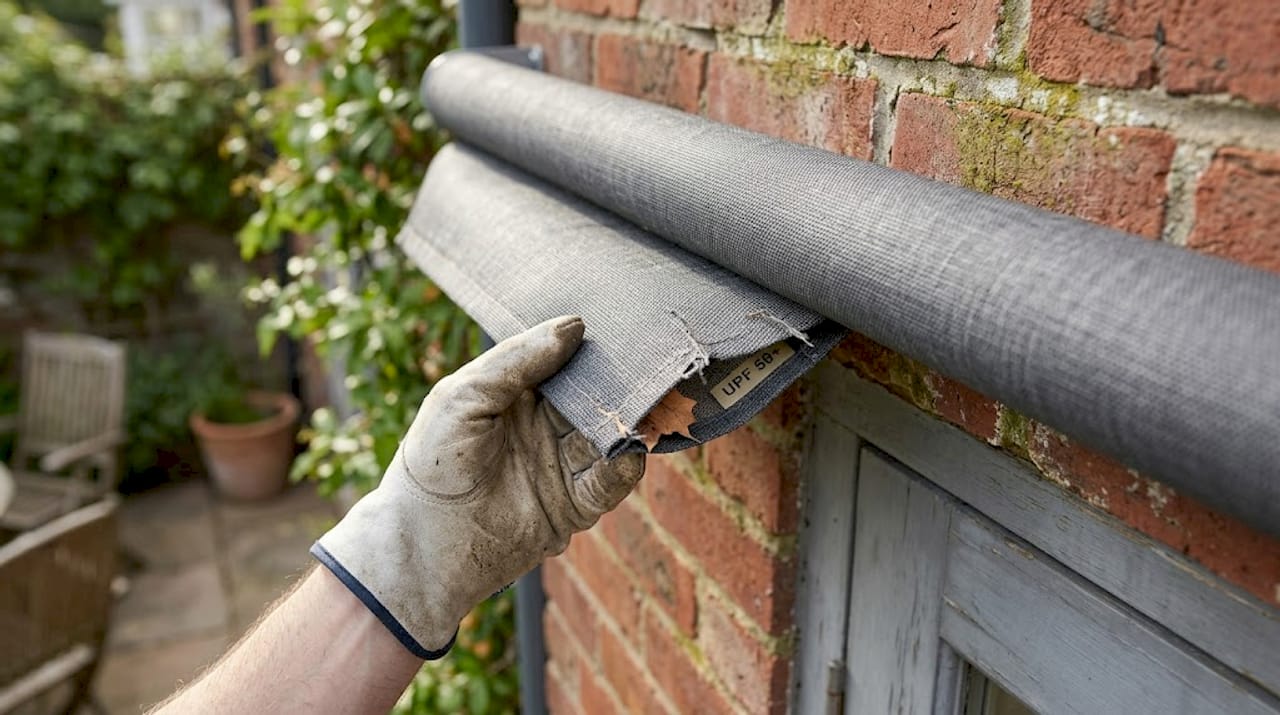
Vinyl-coated polyester offers impressive waterproofing, making it attractive for areas that see heavy rainfall. The trade-off is that vinyl traps heat beneath the awning, reducing comfort on warm days. UV protection is solid when the coating is intact, but once it begins to crack or peel, performance drops sharply.
Standard polyester suits budget-conscious buyers but requires more frequent replacement. UV coatings applied to the surface wear away faster, particularly in humid conditions common across Nottinghamshire and Lincolnshire.
Here is a practical comparison:
Fabric type | UV protection | Water resistance | Comfort | Maintenance needs |
Solution-dyed acrylic | Excellent | Good | High | Moderate |
Vinyl-coated polyester | Good (when intact) | Excellent | Low | High |
Standard polyester | Moderate | Moderate | Medium | High |
Key considerations when choosing your fabric:
Mildew resistance is critical in the UK Midlands, where damp conditions can accelerate fabric deterioration.
Colour stability affects both aesthetics and UV performance; faded fabrics often indicate degraded protection.
Breathability determines how comfortable the shaded area feels on warm days.
Cleaning and recoating every 3 to 5 years is essential for fabric longevity and sustained UV protection, regardless of which material you choose. Exploring your awnings material options in detail before committing to a purchase will save you money and effort in the long run.
Did you know? A solution-dyed acrylic awning installed and maintained correctly can last well over a decade, whereas a poorly maintained coated polyester fabric may need replacing within five years.
UV protection benefits for your comfort, health, and home
Choosing an awning with genuine UV protection delivers benefits that go well beyond simply avoiding sunburn.
Outdoor comfort improves dramatically. UV-blocking fabrics reduce radiant heat, making shaded areas noticeably cooler. This is particularly valuable for restaurants, bars, and hotels across Yorkshire and Derbyshire that rely on outdoor seating throughout spring and summer. Guests stay longer and return more often when outdoor areas are genuinely comfortable.
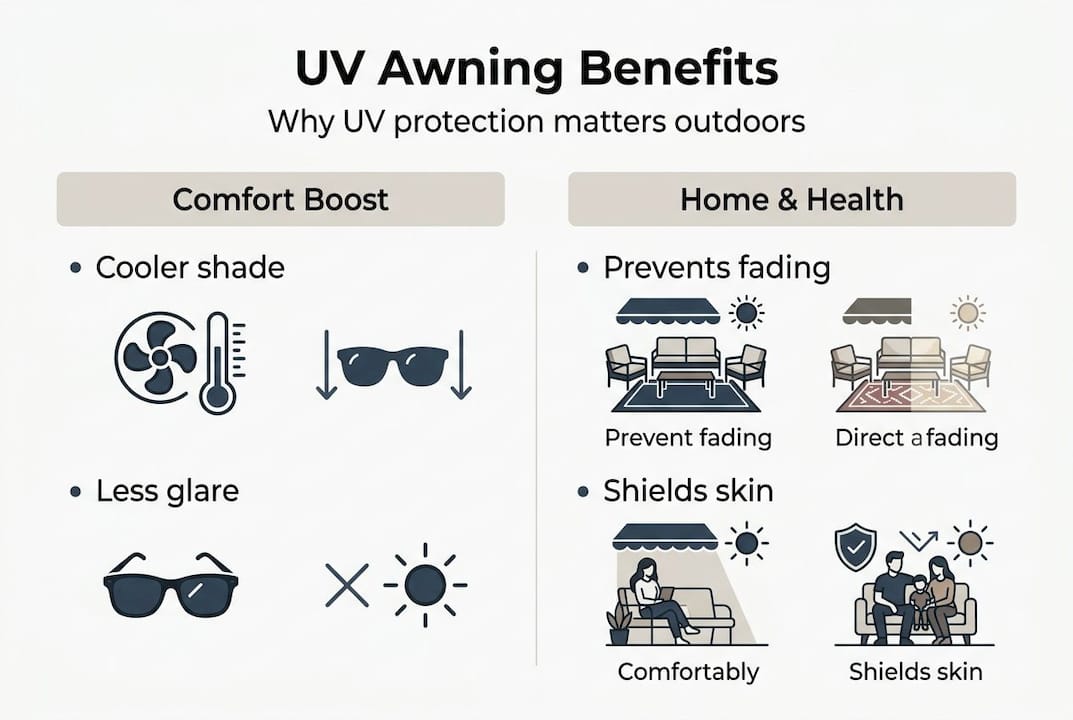
Energy savings are a real and measurable benefit. When an awning shades a window or glass door, it reduces the solar heat entering the building. Acrylic fabrics can reduce heat gain by up to 25%, which translates directly into lower air conditioning or cooling costs for businesses and homes alike. Our guide on how to reduce home heat gain explores this in more detail.
Health protection is perhaps the most compelling argument. Prolonged exposure to UVA and UVB radiation increases the risk of skin damage and eye strain. A UPF 50+ awning creates a genuinely protective outdoor environment, not just a shaded one.
Furniture and flooring last significantly longer under a quality UV-protective awning. Fading and cracking caused by sun exposure are reduced, protecting your investment in outdoor and indoor furnishings alike.
Here is a numbered summary of the core benefits:
Reduces perceived outdoor temperature, improving comfort for guests and family.
Lowers solar heat gain indoors, cutting energy costs by up to 25%.
Protects skin and eyes from harmful UV radiation during outdoor use.
Extends the lifespan of outdoor furniture, cushions, and interior flooring.
Increases the usable hours of outdoor spaces across the year.
For tips on maximising these advantages, our guides on choosing outdoor shading and how awnings enhance outdoor use are worth reading alongside this one.
Pro Tip: Position your awning to shade east and west-facing windows during morning and afternoon sun respectively. This maximises both UV protection and energy savings throughout the day.
How to maintain UV protection in your awning
Even the best fabric will lose its UV-blocking effectiveness without proper care. Maintenance is not optional; it is the difference between an awning that performs for a decade and one that fades and fails within a few years.
Cleaning should happen at least twice a year, ideally in spring and autumn. Use a soft brush and a mild soap solution to remove dirt, bird droppings, and organic debris. Avoid pressure washers, which can damage coatings and weave structure. Rinse thoroughly and allow the fabric to dry completely before retracting to prevent mildew growth.
Mildew prevention is especially important across the UK Midlands, where damp autumns and mild winters create ideal conditions for mould. If mildew appears, treat it promptly with a fabric-safe solution. Left untreated, mildew weakens fibres and compromises UV performance.
Recoating restores the protective barrier on coated fabrics. Cleaning and recoating every 3 to 5 years keeps UV performance at its peak and prevents the coating from cracking or peeling. Wind sensors prevent damage by automatically retracting the awning during high winds, and retracting during extreme weather extends fabric life considerably.
Key maintenance steps at a glance:
Clean with mild soap and a soft brush twice yearly.
Inspect seams, fixings, and the fabric surface for wear each season.
Retract the awning during storms, heavy snow, or sustained high winds.
Recoat solution-dyed acrylic and coated polyester fabrics every 3 to 5 years.
Check that motorised systems and wind sensors are functioning correctly each spring.
Our maintenance checklist for awnings provides a full seasonal schedule tailored to UK conditions.
Pro Tip: Store a written record of when you last cleaned and recoated your awning. It takes seconds to note down but saves you from guessing when the next treatment is due.
What most people miss about UV protection in awnings
After more than 15 years of fitting awnings across Yorkshire, Derbyshire, Nottinghamshire, and Lincolnshire, we have noticed a consistent pattern. Customers arrive focused on UPF numbers, determined to find the highest-rated fabric available. That focus is understandable, but it misses half the picture.
A UPF 50+ rating means nothing if the fabric is poorly maintained, installed in a position that creates hot, stagnant air underneath, or chosen without considering local humidity levels. Solution-dyed acrylics balance longevity and breathability for UK weather, yet many buyers overlook the importance of ongoing maintenance for sustained UV defence.
The right fabric for the Midlands is not simply the one with the highest rating. It is the one that suits your specific exposure, your willingness to maintain it, and the microclimate of your property. A breathable acrylic on a south-facing terrace in Sheffield will outperform a high-rated vinyl on a damp, north-facing courtyard in Nottingham every time.
Our advice: invest in professional guidance before you buy. Read our guide on choosing stylish outdoor shade and speak to someone who knows the region.
Explore awnings and outdoor comfort solutions with Infinity
If you are ready to invest in genuine UV protection for your outdoor space, the next step is finding solutions built for the UK Midlands’ specific conditions.
At Infinity Awnings, we supply and install premium UV-protective awnings, pergolas, and verandas across Yorkshire, Derbyshire, Nottinghamshire, and Lincolnshire. With over 15 years of experience and products from trusted brands including Weinor and Sunbrella, we match every client with the right fabric, fitting, and maintenance plan for their property. Whether you are a homeowner looking to improve comfort or a business wanting to extend your outdoor season, we offer free consultations and tailored quotes to get you started.
Frequently asked questions
What is the best awning fabric for UV protection in the UK Midlands?
Solution-dyed acrylic with UPF 50+, such as Sunbrella or Weinor, offers the best combination of UV shielding, breathability, and durability under regional weather conditions.
How often should I maintain my UV-protective awning?
Clean your awning at least twice a year and recoat every 3 to 5 years; always retract during storms or high winds to preserve fabric performance.
Does UV protection in awnings also reduce heat indoors?
Yes, quality UV fabrics can reduce heat gain by up to 25%, lowering indoor temperatures and reducing the need for mechanical cooling.
Why does mildew resistance matter for awnings in the Midlands?
The region’s humid conditions increase mildew risk, which weakens fabric fibres over time and reduces both UV performance and the overall lifespan of the awning.
Recommended
Comments