
School awning materials: durability and safety explained

TL;DR:
Choosing durable, weather-resistant, and certified materials ensures safety and longevity in school awnings.
PVC-coated polyester and polycarbonate are ideal for high-use, damp, or high-wind school environments.
Proper selection, maintenance, and involving staff in decision-making prevent costly early replacements.
Choosing the right awning material for your school is not as straightforward as picking the cheapest option from a catalogue. Many decision-makers assume all fabrics and panels perform equally once installed, but the reality is that material choice directly shapes how safe, durable, and cost-effective your outdoor shading will be over its lifetime. The wrong choice can mean early replacement, increased maintenance bills, and even safety concerns around children. This guide walks through what genuinely matters when specifying awning materials for educational settings across Yorkshire, Derbyshire, Nottinghamshire, and Lincolnshire, so you can make a confident, well-informed decision.
Table of Contents
Key Takeaways
Point | Details |
Safety comes first | Always choose awning materials that meet safety and non-toxicity standards for use around children. |
Local weather matters | Match awning material properties to the region’s specific climate for maximum lifetime and comfort. |
Maintenance extends life | Regular cleaning and inspection are essential to keep school awnings safe and appealing year after year. |
Evaluate total value | Factor in durability, maintenance, and replacement costs—not just purchase price—when selecting materials. |
What makes an awning material suitable for schools?
Not every fabric or panel that works well above a café terrace will perform reliably in a busy school playground. Schools present a unique set of demands: high footfall, exposure to energetic children, variable weather, and strict safeguarding expectations. The properties that matter most are quite specific.
The essential qualities to look for include:
Impact resistance: Materials must withstand accidental knocks, ball strikes, and general wear without cracking or tearing.
UV stability: Prolonged sun exposure degrades many fabrics, causing colour fade and structural weakening. UV-stable materials retain their integrity far longer.
Water repellence: Pooling water adds weight and encourages mould growth. A good awning material sheds rain quickly and dries fast.
Fire safety compliance: Any material used in a school environment must meet British fire retardancy standards to protect pupils and staff.
Non-toxicity: Children interact closely with outdoor structures. Materials must be free from harmful chemicals or coatings that could cause skin irritation or worse.
Ease of cleaning: Mud, bird droppings, and general grime accumulate quickly. Materials that can be wiped down or jet-washed without damage save significant caretaker time.
As noted in guidance on best awning materials, awning material suitability for outdoor learning spaces is determined by weather resistance and ease of cleaning. These two factors alone eliminate a large proportion of budget options from serious consideration.
For schools in particular, procurement teams often focus heavily on upfront cost. This is understandable given tight budgets, but a material that costs 30% less at purchase and needs replacing in three years rather than ten is not a saving. It is a false economy. The true cost of an awning includes installation, maintenance, and eventual replacement, all of which premium materials reduce significantly.
When installing school awnings, the structural compatibility of the chosen material with the fixing system also matters. Heavier panels require more robust brackets, which adds cost if not planned from the outset.
Pro Tip: Prioritise materials that carry certification to British Standards such as BS 5867 for fire performance and EN 13561 for external blinds and awnings. Ask suppliers for documentation before committing to any purchase.
Comparing popular school awning materials
With clear priorities established, let’s compare the most common awning materials you might encounter in an educational setting.
Material | Lifespan | Weather resistance | Fire safety | Maintenance | Typical cost |
Acrylic fabric | 10 to 15 years | Excellent | Good (treated) | Low | Medium |
PVC-coated polyester | 10 to 20 years | Excellent | Very good | Very low | Medium to high |
Polycarbonate panels | 15 to 25 years | Outstanding | Excellent | Very low | High |
Canvas (untreated) | 3 to 7 years | Poor to moderate | Poor | High | Low |
Each material has its place, but the differences are significant in a school context.
Acrylic fabric is a popular choice for covered walkways and outdoor classroom canopies. It is breathable, resists fading, and holds colour well over many years. Its main limitation is that it requires periodic re-proofing to maintain water resistance.
PVC-coated polyester is arguably the most practical option for high-use school environments. It is virtually waterproof, easy to clean, and highly resistant to mould and mildew. The coating does make it less breathable than acrylic, but for playgrounds and dining areas this rarely matters.
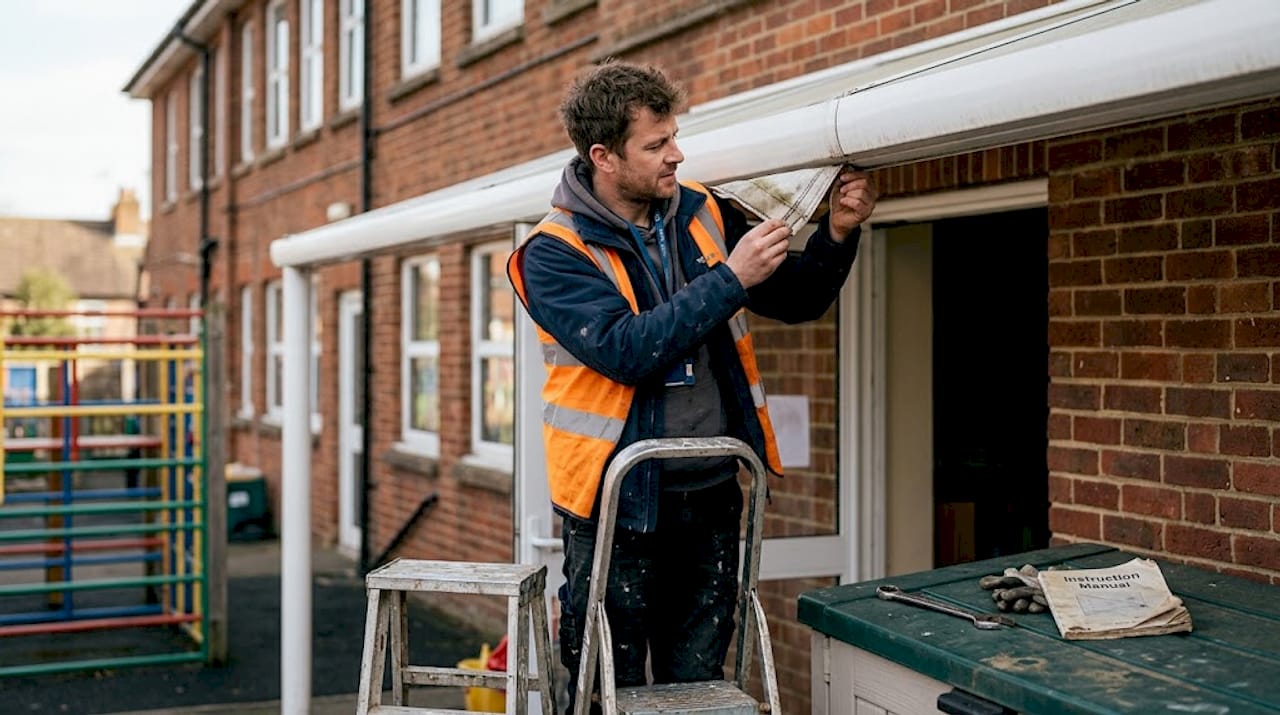
Polycarbonate panels are rigid rather than fabric-based and offer the highest level of structural protection. They are ideal for permanent covered areas where hail, heavy rain, or falling debris is a concern. Some selecting awning fabric guidance highlights that certain fabrics reduce UV exposure by up to 98%, and polycarbonate with UV-inhibiting additives achieves similar results in solid form.
Untreated canvas is the material most likely to disappoint. It absorbs moisture, develops mould rapidly in damp climates, and has a relatively short service life. Schools that choose canvas on cost grounds often find themselves replacing it within three to five years.
“The biggest mistake we see in school procurement is treating awning fabric as a commodity. UV resistance and coating quality vary enormously between suppliers, and those differences show up very clearly after the first winter.”
When each material is most appropriate:
Acrylic fabric: covered outdoor learning areas, entrance canopies, and spaces where aesthetics matter
PVC-coated polyester: playgrounds, dining terraces, and high-traffic zones
Polycarbonate: permanent structures, bike shelters, and areas needing maximum weather protection
Canvas: temporary or decorative use only, not recommended for permanent school installations
Key considerations for Yorkshire and surrounding regions
But not every region faces the same weather risks. Here’s how location-specific factors in Yorkshire and its neighbours alter the best material choice.
The four counties served by Infinity Awnings present a varied but consistently challenging climate. Yorkshire sees some of the highest annual rainfall in England, with parts of the Pennines recording over 1,200mm per year. Lincolnshire, by contrast, is drier but exposed to strong easterly winds sweeping in from the North Sea. Derbyshire and Nottinghamshire sit somewhere between, with moderate rainfall and occasional severe frost.
Regional factor | Yorkshire | Derbyshire | Nottinghamshire | Lincolnshire |
Annual rainfall | High | Moderate to high | Moderate | Low to moderate |
Wind exposure | Moderate to high | Moderate | Low to moderate | High |
UV index (summer) | Moderate | Moderate | Moderate | Moderate to high |
Frost risk | High | High | Moderate | Moderate |
As outlined in guidance on weatherproofing for schools, weather patterns across these four counties dictate the need for high weather-resistance and anti-fungal properties in any outdoor structure.
Moisture control is the single biggest concern for schools in this region. Materials that trap water or allow moisture ingress will develop mould within a single winter, creating both a maintenance burden and a potential health issue in spaces where children spend time daily. Anti-fungal coatings and tight weave structures are not optional extras here. They are baseline requirements.
Wind loading is equally important, particularly for schools in Lincolnshire and exposed parts of Yorkshire. A fabric or panel that is not rated for wind speeds common to these areas can fail structurally, creating a genuine safety hazard.
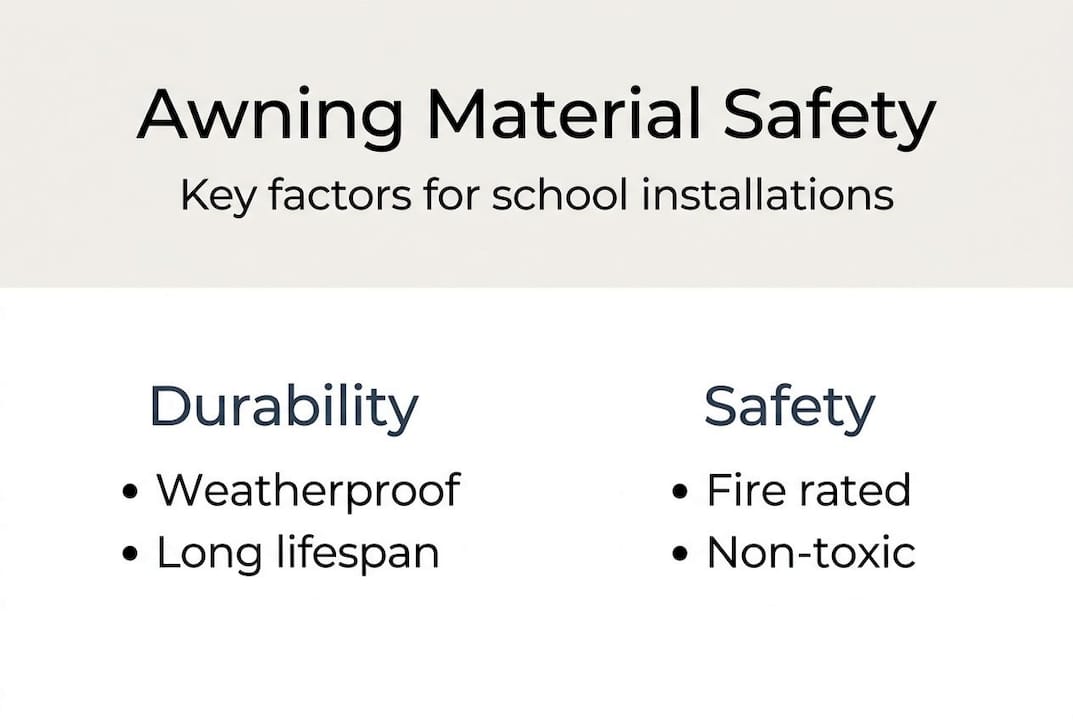
Pro Tip: In high-wind areas, opt for reinforced polycarbonate or heavy-duty PVC blends with wind-rated fixings. Always request wind load certification from your supplier and cross-reference it with the Beaufort scale data for your specific location.
Schools that have experienced weather-related awning failures report not just repair costs but disruption to outdoor learning programmes and, in some cases, temporary closure of outdoor areas pending safety inspections. Specifying correctly from the outset avoids all of this.
Practical advice for selecting and maintaining awning materials
After understanding which materials suit your climate, here’s how to ensure you select and care for the right school awning material.
Selecting the right material is only half the work. How you procure it and maintain it determines whether your investment delivers value over its full service life.
Step-by-step selection process:
Define your requirements: list the specific areas to be covered, expected footfall, and any particular hazards such as ball sports nearby.
Request material data sheets from at least three suppliers, including fire ratings, UV resistance figures, and wind load certifications.
Verify that the supplier holds relevant accreditations and can provide references from other educational installations.
Compare whole-life costs, not just purchase price. Factor in cleaning, re-proofing, and expected replacement timescales.
Confirm that the warranty covers educational use, as some domestic-grade warranties are void in commercial or institutional settings.
As detailed in expert awning maintenance advice, proper maintenance and scheduled checks significantly extend awning longevity and appearance. Building this into your school’s facilities management schedule is straightforward.
Routine maintenance checklist for caretakers:
Clean fabric surfaces with mild soapy water each term, avoiding harsh solvents
Inspect fixings and brackets for corrosion or loosening after winter
Check for any tears, fraying, or delamination of coatings twice yearly
Clear gutters and drainage channels associated with canopy structures after autumn leaf fall
Log all inspections with dates and findings for warranty and compliance purposes
For schools considering retractable options, reviewing best retractable awnings for educational settings will help you understand which mechanisms pair best with specific fabrics.
Pro Tip: Document all warranties, service schedules, and inspection records in a single facilities file. If a warranty claim arises, having complete records dramatically speeds up the resolution process and protects the school’s position.
Our perspective: what most schools get wrong about awning materials
After over 15 years of working with schools and educational institutions across this region, the pattern we see most often is not a lack of information. It is a misalignment between who makes the decision and who lives with the consequences.
Procurement teams focus on budget lines. Caretakers inherit the maintenance burden. Pupils and teachers experience the results daily. When these groups are not aligned at the specification stage, cheap materials get approved by people who will never clean them or replace them.
The most telling example is untreated canvas. We have seen schools replace canvas awnings within two to three years of installation, spending more in total than a quality PVC-coated or polycarbonate solution would have cost initially. The initial saving was real. The long-term cost was not.
Our honest advice: involve your site manager and a representative from the teaching staff in the selection process. They will ask the right questions about cleaning, wind exposure, and daily use that a procurement spreadsheet simply cannot capture. A thorough installation guide can also help frame those conversations with suppliers before any commitment is made.
Enhance your school’s outdoor spaces with expert solutions
If you’re ready to improve comfort and outdoor learning at your school, here’s how expert advice can make all the difference.
At Infinity Awnings, we work with schools across Yorkshire, Derbyshire, Nottinghamshire, and Lincolnshire to specify, supply, and install shading solutions that genuinely stand up to educational environments. From initial consultation through to aftercare, our team guides you through material selection, compliance requirements, and long-term maintenance planning.
Whether you need a robust pergola solutions for a permanent outdoor classroom or veranda installations to extend your dining or social space, we offer bespoke designs built around your school’s specific needs and budget. Get in touch today for a free, no-obligation consultation and let us help you make the right material choice from the start.
Frequently asked questions
Which awning material is best for schools in wet climates?
PVC-coated polyester and reinforced polycarbonate offer superior water resistance and require minimal maintenance, making them ideal for damp regions. Weather patterns across Yorkshire and surrounding counties make anti-fungal, waterproof materials a baseline requirement rather than an upgrade.
How often should school awnings be inspected and maintained?
Routine cleaning every term and thorough inspections at least annually help prevent early material failure. Scheduled checks significantly extend both the appearance and structural integrity of your awning investment.
Are there specific safety regulations for school awning materials?
Schools should select materials compliant with British fire safety and non-toxicity standards for safe use around children. Material suitability for outdoor learning is also shaped by weather resistance and ease of cleaning under current guidance.
How do I know if a material will block enough UV light for play areas?
Look for UV-certified fabrics that guarantee over 95% protection, as specified in supplier data sheets. Certain specialist fabrics reduce UV exposure by up to 98%, which is particularly important for play areas used during peak sun hours.
Recommended
Comments