
The ultimate outdoor shading checklist for UK patios
- Andrew Crookes

- Apr 13
- 8 min read
TL;DR:
Wind resistance is the most critical factor in selecting outdoor shading for northern UK locations.
Combining different shading types optimizes outdoor space usability and weather protection.
Professional installation and maintenance ensure longevity and safety of outdoor shading solutions.
British weather has a talent for ruining perfectly good plans. One moment your patio is bathed in sunshine, the next a sharp northerly wind is sending cushions across the garden. For home and business owners across Yorkshire, Derbyshire, Nottinghamshire, and Lincolnshire, outdoor comfort challenges are a daily reality. The right shading solution transforms that unpredictable situation into a genuinely usable outdoor space, season after season. This checklist walks you through every critical decision, from wind ratings and materials to installation and maintenance, so you invest wisely and get lasting results.
Table of Contents
Key Takeaways
Point | Details |
Check wind ratings | Match shading solutions to your local weather to ensure safety and durability. |
Prioritise quality materials | Aluminium and solution-dyed acrylic offer the best long-term performance in UK climate. |
Professional installation matters | Proper fitting and compliance with regulations prevent costly mistakes and prolong system life. |
Plan maintenance | Regular cleaning and checks extend the life of your shading and keep it safe in strong weather. |
Style and tech can coexist | Modern shading blends attractive finishes with automation, sensors, and added comfort. |
Essential criteria for choosing outdoor shading
Before you browse products or request quotes, there are five non-negotiable factors worth working through. Skip any one of them and you risk spending money on a solution that underperforms, fails early, or creates safety issues.
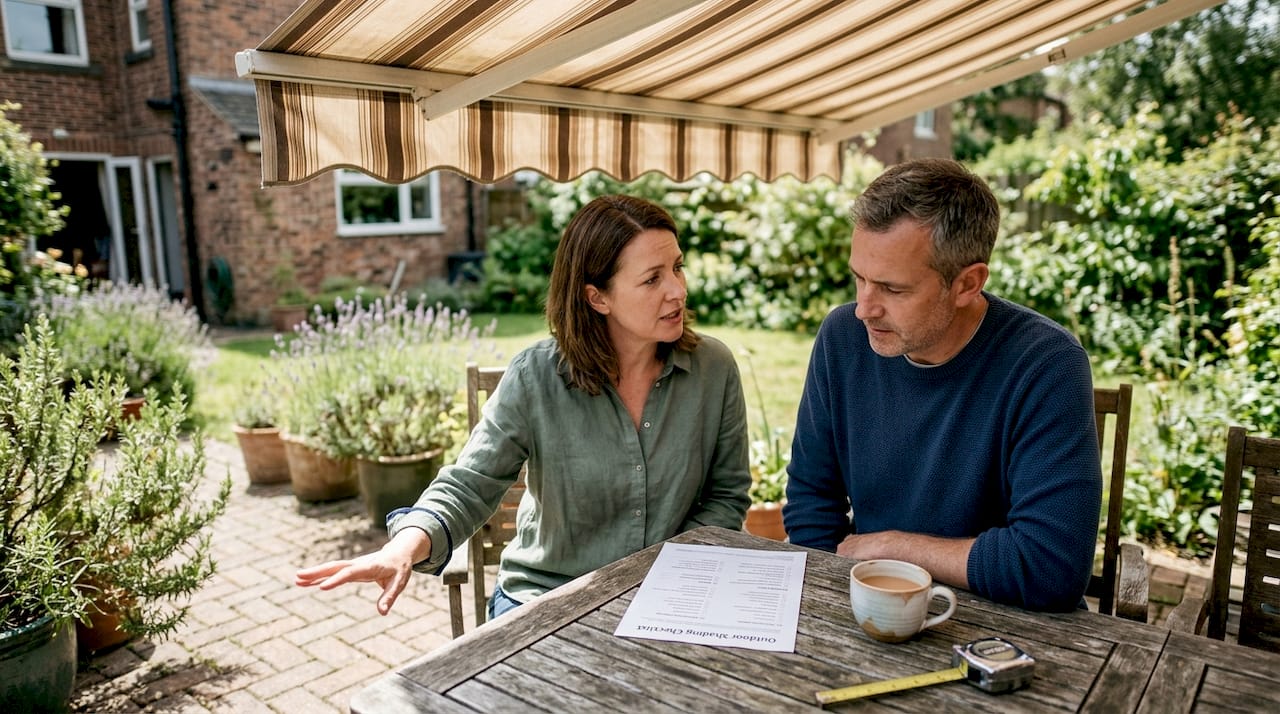
Wind resistance is arguably the most important factor for northern England. Exposed gardens in Sheffield, Lincoln, or the Derbyshire Peaks experience gusts that would stress a poorly rated awning within a single season. Always check the wind speed rating on any product and match it to your specific location.
Material quality separates solutions that last a decade from those that fade and warp within two years. Aluminium frames resist corrosion and hold their shape under load. Solution-dyed acrylic fabrics retain colour far longer than coated alternatives because the pigment runs through the fibre rather than sitting on the surface. These materials cost more upfront, but the benefits of outdoor shading over a 10-year lifespan make them the sensible choice.
Operation type is a practical decision. Manual awnings are simpler and less expensive, but motorised systems with wind and sun sensors retract automatically when conditions change. For a busy household or a commercial venue, that automation prevents damage and removes the need for someone to monitor the weather constantly.
Sizing matters more than most buyers realise. Measure the full area you want to shade at different times of day, accounting for the sun’s angle in summer versus autumn. Undersized shading leaves hot spots; oversized installations can create structural stress.
Installation credentials round out the checklist. Choosing outdoor shading tips consistently highlight professional fitting as essential for compliance and safety. A poorly anchored awning in a 30 mph gust becomes a hazard.
Key selection criteria to tick off before buying:
Wind speed rating matched to your location
Aluminium frame with powder-coat finish
Solution-dyed acrylic or equivalent premium fabric
Manual or motorised operation with sensor options
Correct sizing verified by on-site measurement
Professional installation by a qualified fitter
Pro Tip: If your garden sits on a hillside, near open farmland, or close to a coastal inlet, your microclimate is likely windier than local averages suggest. Ask your installer to factor this in before specifying a product.
Popular outdoor shading options for UK gardens and patios
Now that you know what to look for, see how the main options stack up for Yorkshire, Derbyshire, Nottinghamshire, and Lincolnshire climates.
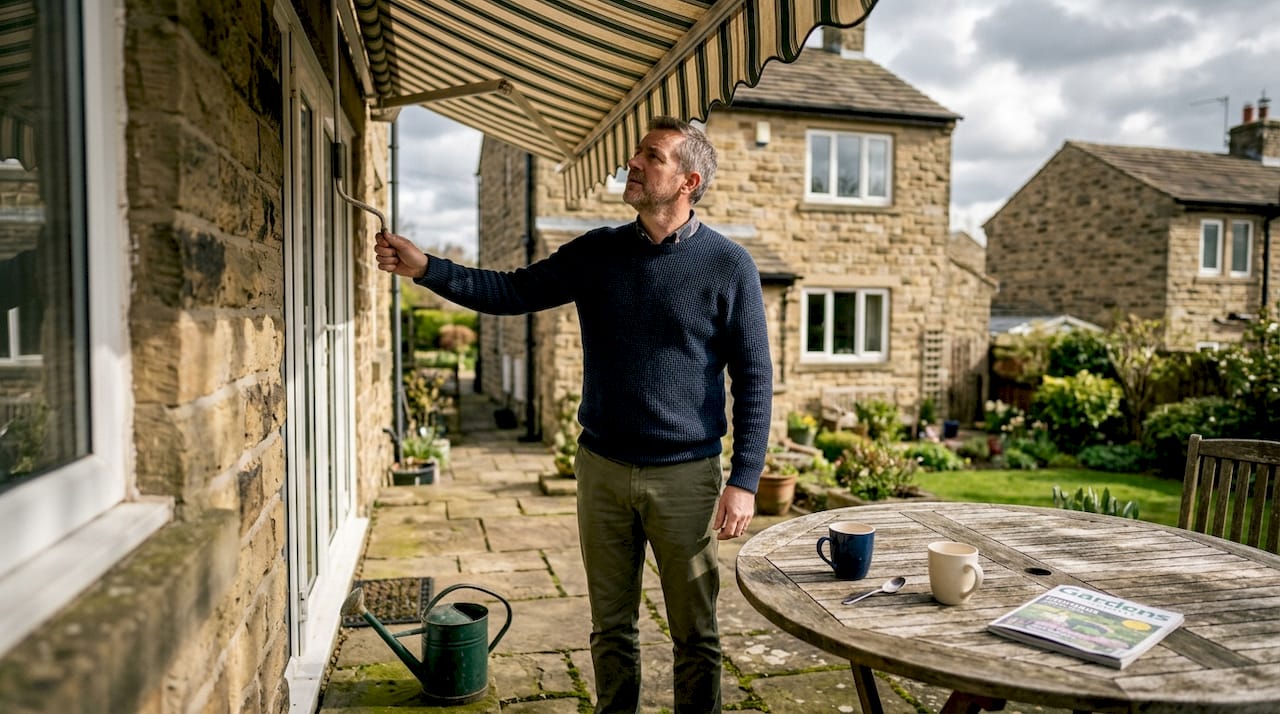
Retractable awnings are the most popular choice for residential patios. They extend when you need shade and retract when the weather turns, giving you flexibility without permanently altering your garden’s appearance. They handle winds up to 25 mph and can reduce solar heat gain by up to 75%, with costs typically ranging from £900 to £3,800 depending on size and specification. The limitation is their wind tolerance; in exposed spots, you need to retract them promptly or risk damage.
Louvred pergolas sit at the premium end of the market and justify the investment for year-round use. Adjustable aluminium louvres let you control light, ventilation, and rain protection in real time. They handle winds exceeding 50 mph and can achieve up to 80% heat reduction, though budgets start from around £8,000. For commercial spaces like restaurant terraces or hotel gardens, that robustness pays for itself quickly. Explore shading examples for UK spaces to see how businesses are using them effectively.
Shade nets and sails offer an accessible entry point, typically costing between £100 and £500. They block 80 to 85% of UV radiation and are easy to install. The downsides are real though: without proper tensioning they sag, collect water, and lose their aesthetic appeal quickly. High winds can tear fixings from walls, making them unsuitable as a standalone solution for exposed northern gardens.
Solution | Wind rating | Heat reduction | Typical cost |
Retractable awning | Up to 25 mph | Up to 75% | £900 to £3,800 |
Louvred pergola | 50+ mph | Up to 80% | £8,000+ |
Shade net or sail | Low | 80 to 85% UV block | £100 to £500 |
If you are unsure which direction suits your space, reviewing how to choose outdoor awnings can help narrow the options.
Pro Tip: On a mixed-use patio where you entertain and also need a quiet seating corner, combining a retractable awning over the dining area with a shade sail over a side seating zone creates layered protection without a large single investment.
Head-to-head comparison: Which shading solution suits you best?
Having outlined each major type, the following comparison clarifies how they differ so you can shortlist your fit.
Feature | Retractable awning | Louvred pergola | Shade net or sail |
Wind resistance | Moderate | High | Low |
Rain protection | Partial | Full (closed) | Minimal |
Heat reduction | Good | Excellent | UV only |
Flexibility | High | Medium | High |
Durability | 10 to 15 years | 15 to 25 years | 3 to 7 years |
Cost | Mid-range | Premium | Budget |
For a right shading solution comparison, use this numbered checklist to guide your decision:
Identify your primary need: sun shade, rain cover, or wind protection.
Decide whether the structure is permanent or needs to be retractable.
Set a realistic budget including installation, not just the product price.
Consider how often the space is used and by how many people.
Factor in whether it is a domestic garden or a commercial venue with daily footfall.
Check whether your property has suitable walls or posts for mounting.
“Awnings offer flexibility and lower upfront cost, but in exposed northern settings they require prompt retraction in high winds. Pergolas cost more and are permanent, yet they provide genuine year-round usability that awnings simply cannot match in challenging conditions. For many Yorkshire and Lincolnshire gardens, the pergola’s robustness is not a luxury, it is a practical necessity.” Outdoor shading explained
Commercial operators should lean towards louvred pergolas or motorised awnings with wind sensors. The contrasting performance between awnings and pergolas becomes most apparent in autumn and spring, precisely when hospitality businesses need reliable outdoor seating to maximise covers.
Planning, installation, and maintenance: Avoid costly mistakes
Once you have made your selection, flawless installation and simple ongoing upkeep are key to long-term satisfaction.
A professional site survey is not optional. It establishes wall or post integrity, identifies any drainage considerations, and confirms that fixings will hold under load. Skipping this step is the single most common cause of premature failure. Professional installation typically takes two to eight hours and includes testing operation, sensors, and tensioning before handover.
Follow this installation checklist:
Book a site survey with precise measurements taken on location.
Verify structural integrity of the mounting wall or posts.
Confirm compliance with local building regulations before work begins.
Ensure professional tensioning of all fabrics and fixings.
Test all sensors, motors, and manual overrides before the installer leaves.
“The most expensive mistake we see is homeowners mounting awnings onto render or ageing brickwork without structural assessment. Wind load on a 4-metre awning is significant, and an inadequate fixing will fail eventually.”
For ongoing care, follow this maintenance schedule based on established awning care guidance:
Monthly: Inspect fixings, lubricate moving parts, check fabric for small tears.
Quarterly: Clean fabric with mild soap and warm water, rinse thoroughly.
Annually: Reproof fabric if needed, check motor function and sensor calibration.
Always: Retract in winds above 15 to 25 mph to prevent stress damage.
With this routine, quality systems last 10 to 15 years or more.
Pro Tip: Do not overlook building regulations. Under Part L and Part O of the Building Regulations, new builds in England must now include measures to prevent overheating, and external shading is the preferred solution because it blocks solar heat before it enters through glazing, unlike internal blinds.
Our verdict: What most guides miss about outdoor shading in the UK
Most online checklists treat wind resistance as a footnote. In our experience working across Yorkshire, Derbyshire, Nottinghamshire, and Lincolnshire for over 15 years, it is the deciding factor. A beautiful awning that spends half its life retracted because of wind is not a good investment. Wind-rated motorised awnings and louvred pergolas are not upsells; they are the appropriate specification for northern England.
Another thing guides consistently understate is the style opportunity. Modern solutions from brands like Weinor and Tarasola offer LED lighting, integrated heaters, and fabric choices that genuinely elevate a space. Shading is not just functional; it defines the character of your outdoor area.
The domestic versus commercial divide also matters more than most articles acknowledge. A homeowner using their patio twenty times a year can manage with a mid-range retractable awning. A restaurant operating an outdoor terrace five days a week needs something that handles UK Part L and Part O compliance and daily mechanical use without fuss. Getting that specification right from the start saves significant cost and disruption later. Invest in the right solution once, rather than replacing an under-specified one twice.
Find your perfect outdoor shading solution with Infinity Awnings
Ready to put this checklist to work? At Infinity Awnings, we have spent over 15 years helping home and business owners across the North and East Midlands create outdoor spaces that genuinely get used all year round.
Whether you are drawn to a sleek retractable awning for a residential patio or a robust louvred pergola for a commercial terrace, our team handles everything from the initial site survey through to installation and aftercare. Browse our range of garden pergola solutions or visit the Infinity Awnings website to explore the full collection and request a free, no-obligation quote. Let us take the guesswork out of the process and help you find a solution built for your space, your climate, and your style.
Frequently asked questions
What is the most wind-resistant outdoor shading option for the UK?
Louvred pergolas offer the highest wind resistance, often handling 50+ mph winds, making them ideal for exposed homes or commercial venues in northern England.
How much can outdoor shading reduce cooling costs?
Quality solutions can achieve up to 97% solar heat reduction, cutting cooling costs by 10 to 25% and lowering indoor temperatures by 3 to 5°C.
What are the legal requirements for outdoor shading in new UK homes?
New homes must comply with Part L and Part O regulations, which mandate external shading to prevent overheating, as it blocks solar heat before it passes through glazing.
How long do outdoor shading systems last?
With a consistent maintenance routine, quality outdoor shading systems last 10 to 15 years or longer, particularly when retracted in high winds and cleaned quarterly.
Is DIY outdoor shading a good idea?
DIY shade nets and sails risk sagging and fixing failure without correct tensioning; professional installation is strongly recommended for safety, compliance, and long-term performance.
Recommended
Comments