
Awning fabric types explained: your 2026 guide

TL;DR:
Choosing the right awning fabric depends primarily on the climate, with woven acrylics ideal for sun-rich environments and vinyl-coated fabrics better suited for heavy rain.Understanding the distinctions in construction, weight, and performance helps ensure durability, aesthetics, and long-term value. Proper selection tailored to environmental needs prevents costly replacements and optimizes outdoor shading solutions.
Not all awning fabrics are created equal, and the gap between a good choice and the wrong one can mean the difference between a shade solution that lasts a decade and one that fades, sags, or leaks within a couple of seasons. Getting awning fabric types explained properly is something surprisingly few buyers prioritise before they purchase. The fabric you choose affects UV protection, water resistance, breathability, appearance, and long-term running costs. Whether you are a homeowner in Yorkshire looking to shade a patio or a restaurant owner fitting out a commercial terrace, this guide cuts through the confusion and gives you the knowledge to choose with confidence.
Table of Contents
Key takeaways
Point | Details |
Two main fabric categories | The awning industry divides materials into woven acrylics and vinyl-coated fabrics, each suited to different climates and uses. |
Climate drives fabric choice | Solution-dyed acrylic suits hot, sunny conditions; vinyl-coated polyester performs best in humid or rainy environments. |
Waterproof vs water-repellent | Acrylic fabrics resist water but are not fully waterproof; vinyl-based fabrics act as physical barriers against rain. |
Fabric weight matters | Premium fabrics such as those weighing around 9 oz/sq yd balance durability with a supple, attractive finish. |
Match graphics to fabric type | For commercial awnings, graphic application methods must match fabric type to prevent premature fading and failure. |
The main awning fabric types explained
The awning and outdoor shading industry primarily categorises materials into two broad groups: woven acrylics and vinyl-coated fabrics. Understanding what sits within each group, and where other materials like mesh and composite fabrics fit in, is the foundation for any sensible buying decision.
Woven acrylic fabrics are made from solution-dyed acrylic fibres woven together to create a breathable, textile-like material. They are the go-to choice in high-sun environments because the weave allows air to circulate beneath the awning, reducing heat build-up. Brands such as Sunbrella are the most recognised names in this category, and the market standard they set is widely referenced when evaluating quality.
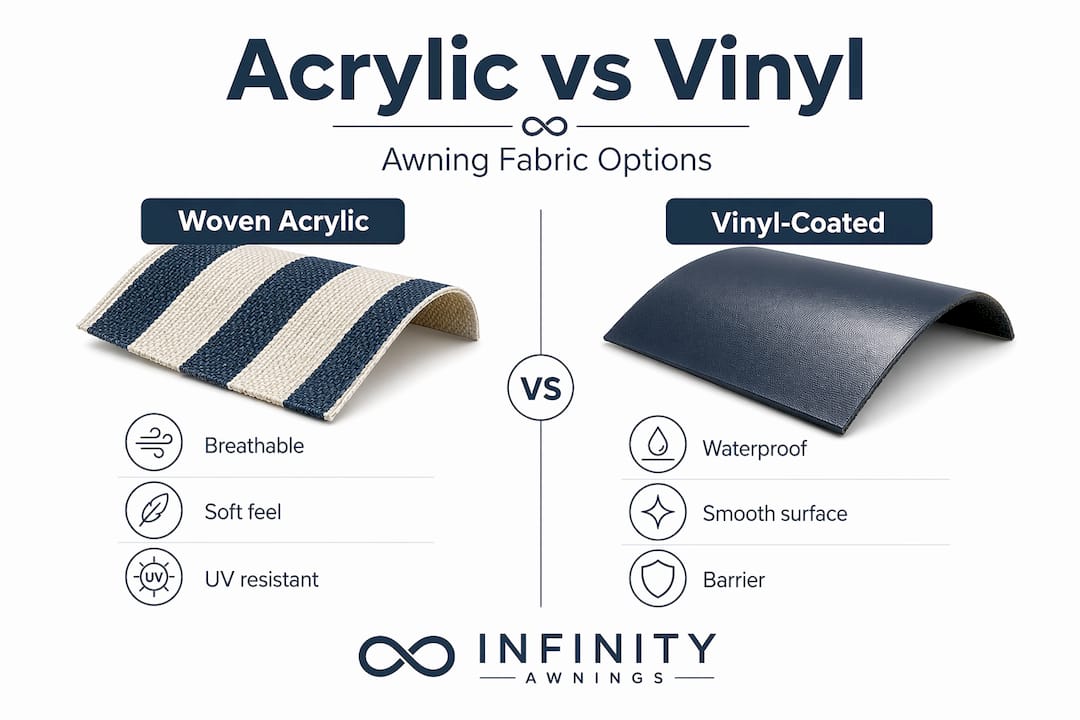
Vinyl-coated fabrics take a base material, usually polyester, and coat or laminate it with PVC or another vinyl compound. The result is a non-porous surface that repels water completely. These fabrics are popular in commercial settings, covered walkways, and anywhere moisture management is the primary concern.
Beyond these two main groups, you will encounter:
Synthetic mesh fabrics which allow wind to pass through, reducing stress on the frame and flapping in exposed locations
PVC-laminated polyester which offers structural rigidity and performs well in cold climates where snow load and temperature cycling are concerns
Composite fabrics which combine a polyester base with acrylic or vinyl coatings for enhanced strength in demanding environments
Pro Tip: When browsing fabric samples, run your fingers across the weave. A woven acrylic will feel soft and textile-like; a vinyl-coated fabric will feel smooth and slightly plasticky. This simple test tells you immediately which category you are handling.
Each material category has a distinct purpose. The temptation to choose based on appearance alone is understandable, but the wrong outdoor fabric option in the wrong environment will cost you considerably more over time.
Choosing fabric by climate and environment
Climate is the single most reliable guide when narrowing down your outdoor fabric options. Fabric selection varies significantly by environment, and the four main conditions each point clearly to a preferred material.
Climate type | Recommended fabric | Key benefit |
Hot and sunny | Solution-dyed acrylic | UV resistance, breathability, colour retention |
Humid and rainy | Vinyl-coated polyester | Full waterproofing, mould resistance |
Windy and exposed | Synthetic mesh | Reduces wind load, minimises frame stress |
Cold and snowy | PVC-laminated polyester | Structural durability, handles weight loading |
For most of the UK, including Yorkshire, Derbyshire, and Lincolnshire, the reality is a mixed climate with moderate rain, intermittent sunshine, and occasional strong winds. This is where the distinction between water-repellent and waterproof fabrics becomes genuinely important. Acrylic fabrics resist water but are not fully waterproof. In a light shower, a quality acrylic awning will shed water effectively. In sustained, heavy rain, some moisture may eventually pass through the weave.
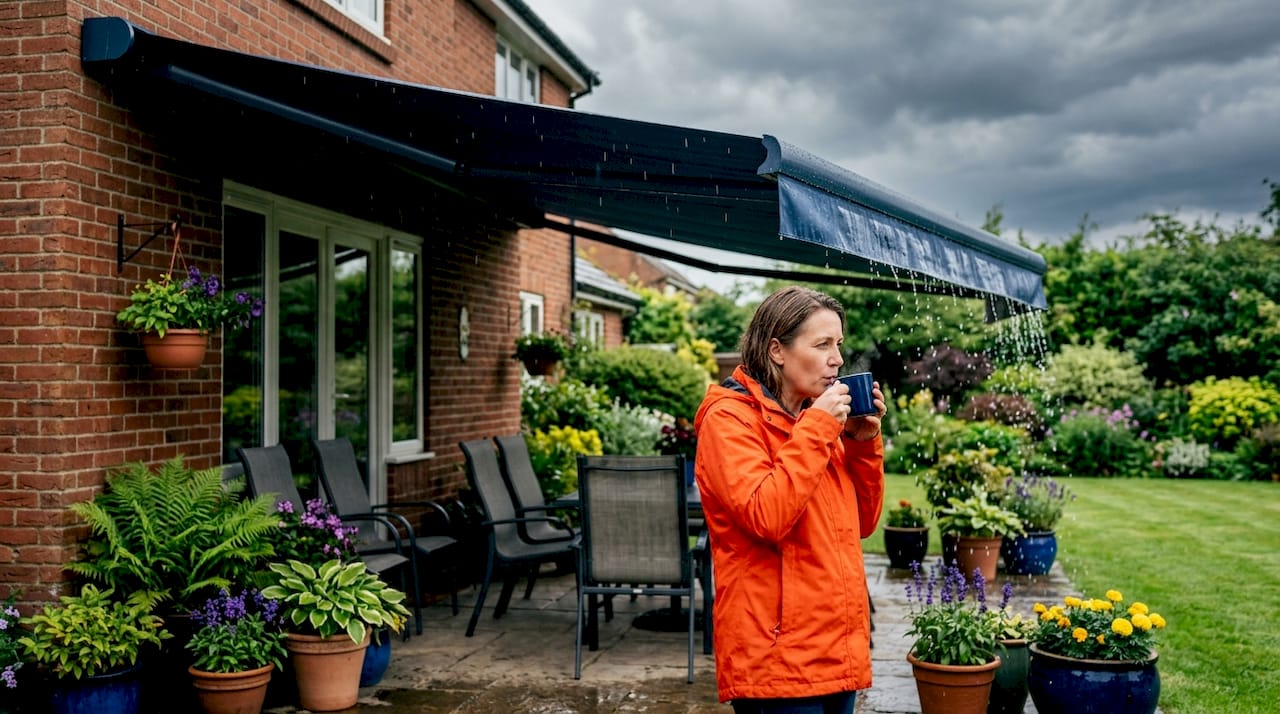
Vinyl-coated fabrics, by contrast, act as a physical barrier and will keep the area beneath them dry regardless of rainfall intensity. For a restaurant terrace where keeping diners dry is non-negotiable, vinyl-coated polyester makes more practical sense than the more aesthetically appealing woven acrylic.
For coastal sites, UV resistance tested up to 2,000 hours of exposure is the benchmark worth seeking, alongside frames and fixings suited to salt-air conditions.
Pro Tip: If your site is exposed to both heavy rain and strong sun at different times of year, consider asking your awning supplier whether a high-quality woven acrylic with a DWR (durable water repellency) finish offers enough weather resistance for your specific needs before defaulting to vinyl.
You can explore further detail on fabric and material selection for coastal and weather-exposed properties in the Infinityawnings resource library.
Fabric construction, weight, and performance
The way a fabric is made has as much influence on performance as the raw material itself. This is where a genuine awning fabric comparison needs to go beyond surface descriptions.
The most significant construction factor is solution-dyeing. In this process, pigment is infused into the fibre during production rather than applied to the surface afterwards. The analogy used widely in the industry is useful here: solution-dyeing is like a carrot, where colour runs all the way through, versus a radish, where colour sits only on the skin. When a solution-dyed fibre is exposed to UV light or abrasion, the colour beneath the surface is identical to the colour on top. The result is a fabric that resists fading far longer than surface-dyed alternatives.
Fabric weight is the other technical factor buyers often overlook. Premium awning fabrics weigh approximately 9 oz per square yard, which represents the industry sweet spot between tensile strength and a supple, attractive drape. Fabrics that are too light may flutter excessively and wear at fold points. Fabrics that are too heavy can place unnecessary strain on the retraction mechanism of a retractable awning.
Key performance factors to consider across fabric types:
Breathability is largely a property of woven acrylics. High-performance breathable fabrics can block up to 98% of UV radiation while still allowing enough airflow to reduce heat accumulation beneath the canopy.
Coating method in vinyl fabrics determines both waterproofing performance and longevity. A pressure-bonded PVC laminate will outlast a simple dip coating in sustained outdoor use.
Graphic compatibility matters acutely for commercial applications. Graphic methods must match the fabric type precisely. Heat-transferred vinyl and acrylic paints suit woven acrylic fabrics; pressure-sensitive vinyl films are appropriate for smooth vinyl-coated surfaces. Using the wrong method accelerates colour loss and can cause delamination within months.
Understanding these construction differences separates buyers who get lasting value from those who replace their awning fabric every few years.
How to choose awning fabric for your project
Translating technical knowledge into a practical decision comes down to asking the right questions before you commit. Here is a structured approach to how to choose awning fabric that works for your specific situation.
Define your primary use case. Is the awning for shade, rain protection, or both? A residential garden pergola in a sheltered spot prioritises UV performance and aesthetics. A pub beer garden in the north of England needs rain protection first and foremost.
Assess your exposure. Observe the site at different times of day and in different weather. Note whether it catches prevailing winds, whether it sits in direct afternoon sun, and whether it is near the coast. Each factor points toward a different fabric type.
Set a realistic maintenance expectation. Woven acrylics are generally easier to clean with a soft brush and mild soapy water. Vinyl-coated fabrics resist mould and mildew more readily in persistently damp conditions but can crack if allowed to dry out and fold repeatedly without care. Knowing how much maintenance you will realistically carry out shapes which material suits you. The Infinityawnings guide on awning care and maintenance covers this in practical detail.
Check warranty terms carefully. A reputable fabric manufacturer will offer warranties of 5 to 10 years on solution-dyed acrylic products. Shorter warranties on cheaper fabrics often reflect genuine differences in expected lifespan.
Balance aesthetics with performance honestly. The most common pitfall in fabric selection is choosing a colour or texture that looks beautiful in a showroom but performs poorly in the actual installation environment. A paler woven acrylic may look stunning but show dirt faster in an urban setting. A dark vinyl fabric may handle rain perfectly but absorb heat in a sun-exposed spot.
Pro Tip: Always request a physical fabric sample before ordering and leave it outside in your actual conditions for a week. Observe how it handles sun, rain, and wind in situ rather than relying solely on specification sheets.
For a deeper look at selecting awning fabric for specific weather environments, Infinityawnings has dedicated guidance for domestic properties across the UK.
Fabric brands, quality tiers, and cost
Understanding what you are likely to pay and why helps set realistic expectations when comparing quotes for awning installations.
Fabric type | Typical price range (per yard, 2026) | Expected lifespan |
Premium solution-dyed acrylic | £28 to £40 | 10 to 15 years |
Mid-range woven acrylic | £15 to £27 | 5 to 8 years |
Vinyl-coated polyester | £18 to £35 | 8 to 12 years |
Synthetic mesh | £12 to £22 | 7 to 10 years |
Premium acrylic fabrics can cost around $35 per yard at the high end of the market, reflecting genuine differences in fade resistance and structural longevity. Choosing a cheaper fabric to save money upfront tends to mean more frequent replacement, which negates the saving over a five to ten year period.
When evaluating brands, look for:
Independent UV resistance testing with documented hours of exposure
Mould and mildew resistance certification, particularly relevant in the UK climate
Third-party colour fastness ratings, not just manufacturer claims
Availability of replacement fabric in the same colourway years after initial installation
The market leaders in premium outdoor fabric are well established, and their reputation is backed by decades of performance data. Purchasing a fabric from a supplier who can demonstrate provenance, testing, and warranty support is always the better long-term decision, regardless of the initial price difference.
My perspective on where buyers go wrong
I have worked on both residential and commercial awning installations across Yorkshire and beyond, and the pattern I see repeatedly is buyers who spent significant money on the wrong fabric for their environment. Not cheap fabric. The wrong fabric.
In my experience, the waterproof versus water-repellent confusion causes more customer disappointment than any other single factor. People see a woven acrylic, admire the texture and colour range, and assume it will keep them completely dry in a British summer downpour. When it does not, they conclude the awning was poor quality. The awning was fine. The expectation was not matched to the product.
What I think is genuinely underrated is the composite category. Polyester bases with acrylic or vinyl coatings sit between the two main groups and handle tough environments, high traffic, and awkward sun and rain combinations better than either pure category. They sacrifice some breathability, but for a commercial terrace that needs to be operational in almost any weather, that trade-off is worthwhile.
My honest advice is this: choose your fabric before you choose your colour. Get the performance specification right for your climate and usage first, then find the aesthetic options within that specification. The brands worth working with will have enough variety within the right fabric category that you will not feel limited.
— Andrew
Get expert guidance from Infinityawnings
Choosing the right awning fabric is a decision worth getting right the first time. At Infinityawnings, we have been helping homeowners and businesses across Yorkshire, Derbyshire, Nottinghamshire, and Lincolnshire select and install outdoor shading solutions for over 15 years. Whether you need a retractable awning with a premium solution-dyed acrylic canopy or a weather-resistant pergola with vinyl-coated fabric panels, we match fabric performance to your environment and aesthetic priorities. Our garden pergola range combines stylish design with durable fabric options tailored to UK weather conditions. Contact us today for a free, no-obligation quote and speak with an expert who knows the difference fabrics make in the real world.
FAQ
What is solution-dyed acrylic awning fabric?
Solution-dyed acrylic is a woven fabric where pigment is infused into the fibre during production rather than applied to the surface. This makes it highly resistant to fading under UV exposure and is widely considered the premium choice for outdoor awnings in sunny climates.
What is the difference between waterproof and water-repellent awning fabric?
Water-repellent fabrics, such as woven acrylics, shed light rain effectively but will allow moisture through under sustained heavy rainfall. Waterproof fabrics, such as vinyl-coated polyester, form a physical barrier that prevents water penetration entirely, making them the better choice for full weather protection.
Which awning fabric is best for the UK climate?
For most UK locations, a high-quality solution-dyed acrylic with a durable water-repellency finish handles mixed sun and rain well. In wetter or more exposed commercial settings, vinyl-coated polyester is the more practical choice for consistent rain protection.
How long should a quality awning fabric last?
A premium solution-dyed acrylic fabric with a manufacturer warranty typically lasts between 10 and 15 years when properly maintained. Mid-range woven acrylics and vinyl-coated polyester fabrics generally offer 5 to 12 years of reliable performance depending on exposure conditions.
Does the type of awning fabric affect printed graphics or branding?
Yes. Graphic application methods must be matched precisely to the fabric type. Heat-transferred vinyl suits woven acrylic fabrics, while pressure-sensitive vinyl films are designed for smooth vinyl-coated surfaces. Using the wrong method leads to premature fading and delamination, which is a costly mistake for commercial signage on awnings.
Recommended
Comments